The sugars line on a nutrition label is not the same as added sugar, and the ingredient list is ordered by weight. Together, both tell the full sugar story.
By the HCG Health DeskPublished 4 min read
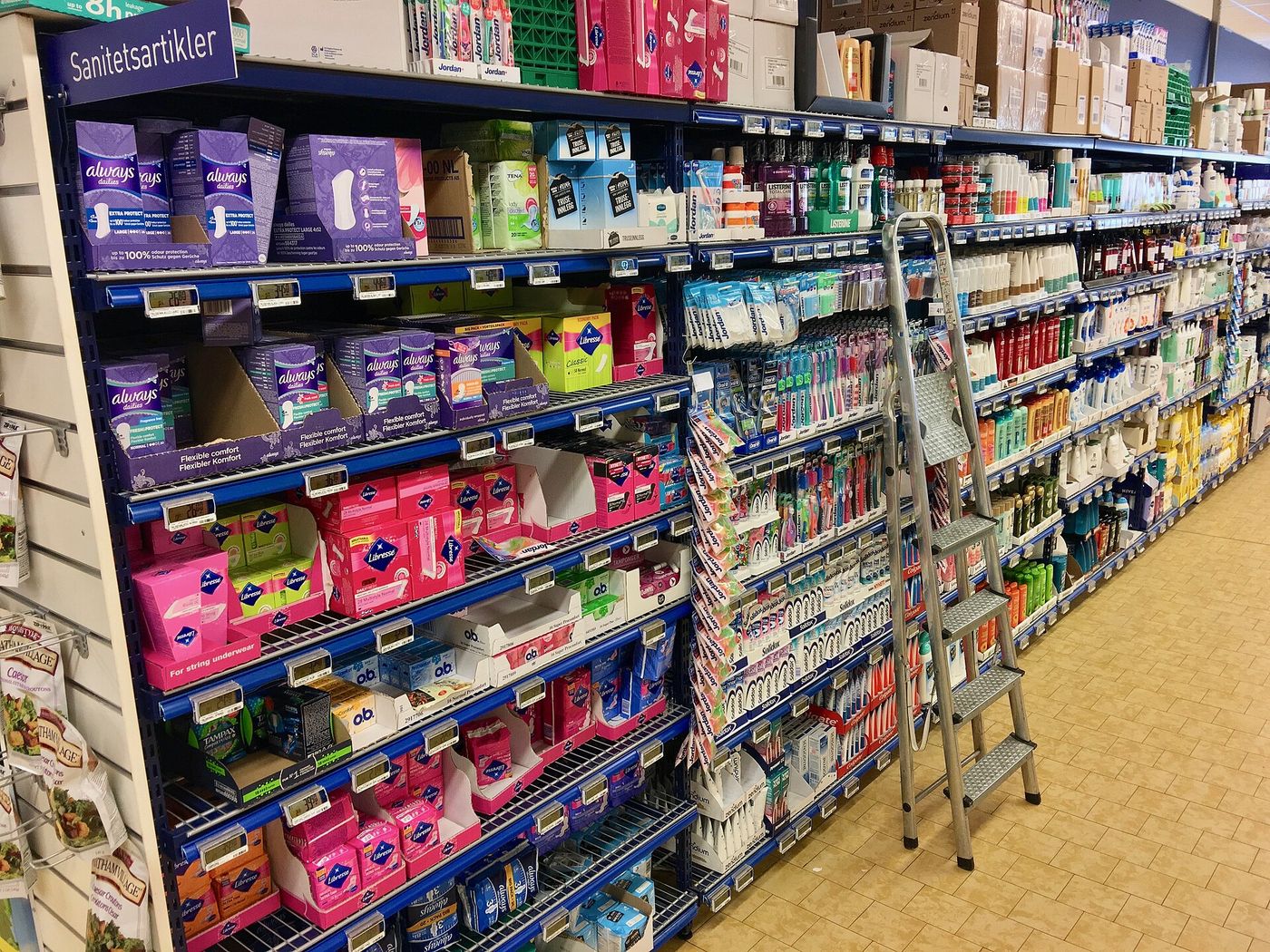
Aisle shelves with tampons, women's sanitary towels ("sanitetsartikler"), tooth brushes, health and body care products, . Photo: Wolfmann / Wikimedia Commons (CC BY-SA 4.0)What this article covers
The sugars line on a nutrition label is not the same as added sugar, and the ingredient list is ordered by weight. Together, both tell the full sugar story.
Hidden Sugars Go Far Beyond the Sugars Line
The sugars line on the nutrition label includes all sugars, both naturally occurring ones like those in milk and fruit, and any added sugars. This means that "sugars" lines on their own do not specify how much of the total sugars came from added sugars, as opposed to sugars that are naturally in a product. A 20 ounce soda label might say "39g Sugars" – but 39 grams of that total is entirely added sugar, making the sugars line equal to the added sugars figure.
The Food and Drug Administration (FDA) specifies that added sugars are part of the total sugars number, part of it. The label says "includes 39g Added Sugars" as part of the 39g total sugars figure. Only the added sugars section shows grams and daily value (DV) for added sugars alone.
Per-100g Helps Flag a Product's Sugar Density
The per-100g information in the nutrition table should be an area that consumers focus on to enable quick comparisons. The UK's National Health Service (NHS) issued these clear guidelines: 5g or less per 100g is low in sugar and more than 22.5g of total sugars per 100g is high in sugar. Glancing between 100g numbers quickly helps to decide between similarly-sized packaged foods.
Comparing products like chocolate bars, consumers can see one with 28.5g sugar per 100g has higher sugar density than another with 18.5g. These per-100g percentages can serve as a quick red-flag or pass marker. Employing this to read the table is a strategy that searches for high intensity added sugars that are obscured, for instance, in smaller serving sizes.
The Ingredient List Tells a Second Story
Alongside the nutrition table, the ingredient list offers supplementary information on a packaged product's content. The ingredient list must be ordered by weight, so the most prominent ingredient is listed first, and least by last. This order of foods' ingredients can imply a manufacturer comprises the item out of sugars primarily, or other fat, protein or starch ingredients instead. When sugars are high on the list, and more than one of them are named, it signals the product likely has added sugars.
In the United States, there is another layer to the ingredient list that may indicate added sugars. The FDA Food Labeling Guide states that sub-ingredients must be listed by weight in parentheses after the primary ingredient grouping. That means if a product lists "Ingredients: Sugar (Dextrose, Sucrose)," the constituent sugars they are referring to are equally added or natural. In this example, it signifies the manufacturer added and included certain specific sugars. So, for instance, this product contains acids, dextrose, fructose, honey and malt syrup also as "sugars." This tagging implies the product contains added sugars.
What Counts as Added Sugar
The FDA specifies that only added sugars are listed with a gram amount and daily value (DV) of 20% or more. This drives attention to distinct added sugar 'sub-ingredients' like sugar, dextrose, maltose, honey, and maple syrup for consumer comprehension. However, when items contain 5% DV or less, it is considered a low source of added sugars.
For an example, single-ingredient sugar and syrup packages are often packaged items that must list added sugars. So, products that include just maple syrup, honey, or table sugar, must list added sugars on the label.
What the Label Still Will Not Tell You
The nutrition panel does not sort a product's total sugars number into added sugar versus naturally occurring sugars. Without knowing if a product contains mostly added sugars or not, consumers have to account for both the total sugars and added sugars. Even though the new rules specify the presence of "added sugars," a grams amount, and DV % for added sugars, the original total sugars measurement remains on the label. So consumers must cross-check both, and the ingredient list. While interpretive, these markers together hint at whether a product has naturally occurring or added sugars.
Running Through a Product's Sugar Scorecard
To sum up, a common tactic is labeling fruit-packed cereals, granola bars, dairy products, or other foods marketed as "low in sugar" or "no added sugar". However, 10g of natural fruit sugar in a cereal can still imply 25% of the daily value for sugar consumption.
Some products hide sugars by labeling them flavors, or using an artificial sweetener ingredient list. Lastly, products may use high-fructose corn syrup, which expert controversy still surrounds, and list these as sugars. Foods like corn syrup are prevalent added sugars in products.
Thus, a careful combination reading of the ingredient list plus the boxed sugars amount gives consumers information. It reveals, in a snap, about a product's annotation of sugars, and if they've disguised sugars in an ingredient name.
This is health information, not medical advice. We describe mechanisms, numbers and published evidence. What applies to you depends on your history, your medication and your clinician — take decisions with them, not with an article.
H
HCG Health Desk
HCG is written by an independent desk covering weight loss, diets and metabolic health. We do not sell programmes, supplements or injections, and we say when the evidence is thin.