How Much Protein per Day for Weight Loss, by Body Weight
A 165-pound adult's protein requirement jumps from 60 grams when sedentary to up to 60 grams when sedentary to up to 112 grams in a deficit, and at least 110 grams for an older dieter.
By the HCG Health DeskPublished 5 min read
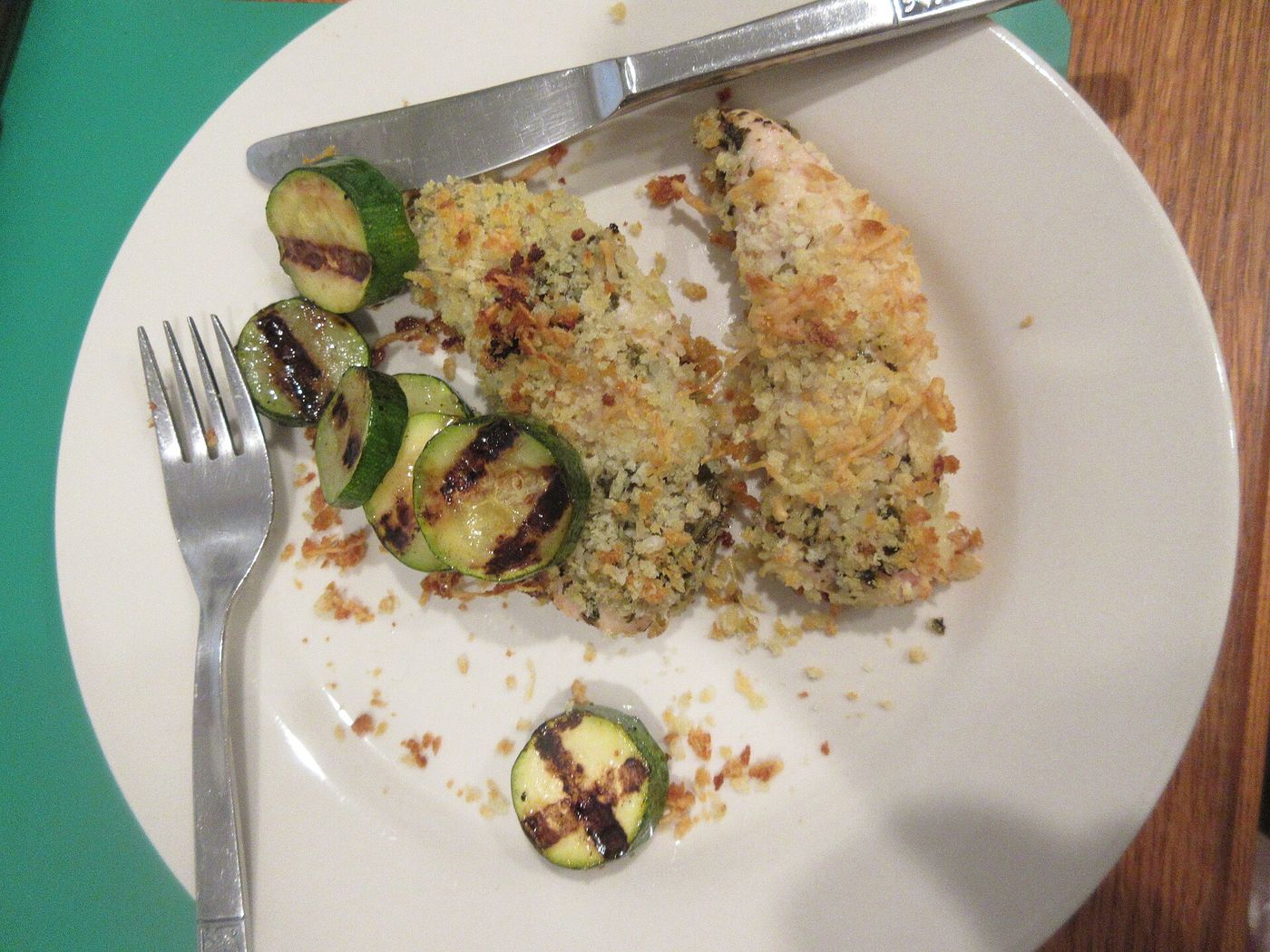
Chicken and Zucchini dinner. Photo: Infrogmation of New Orleans / Wikimedia Commons (CC BY-SA 4.0)What this article covers
A 165-pound adult's protein requirement jumps from 60 grams when sedentary to up to 60 grams when sedentary to up to 112 grams in a deficit, and at least 110 grams for an older dieter. Here is where the literature shifts.
Protein needs leap with activity and age: 60 grams at rest versus 110 in older and active adults
The Recommended Dietary Allowance (RDA) of protein is 0.8 grams per kilogram of body weight per day for the average sedentary adult. For a 165-pound person, that example intake equates to 60 grams per day. However, that number barely registers as a minimum, as the protein content of a daily diet multiplies for those living with obesity who stand to lose fat, and again for those beyond middle age.
The older guidelines for protein intake—and the most commonly cited RDA level of 0.8 grams per kilogram—are not the bases for calculating how much protein to aim for per kilogram per day for weight loss. In fact, the recommendation of the current literature is currently separated into several categories: for adults with body weights in the overweight and obese categories wishing to maintain muscle on a hypocaloric diet, between 1.2 and 1.6 grams per kilogram; for active exercisers, between 1.1 and 1.5 grams per kilogram; for sedentary older adults, between 1 and 1.2 grams per kilogram.
These thresholds matter because they multiply against starting weight to land higher than the 0.8 grams per kilogram recommended for basic sufficiency. In some cases, they double it.
For a dieting adult, 1.2 to 1.6 grams per kilogram is the range
For adults with overweight and obesity who are eating a hypocaloric diet and wishing to lose fat, an average daily intake of 1.2 to 1.6 grams of protein per kilogram seems to be the optimal weight-loss range for preventing muscle loss. The same range, 1.2 to 1.6 grams per kilogram, will also support long-term weight-loss maintenance.
A 165-pound person at 1.2 grams per kilogram would be at 84 grams per day, while at 1.6 grams per kilogram that same person would be at 112 grams. For a 200-pound person, 1.2 grams per kilogram equals 100 grams per day, and 1.6 grams equals 130 grams.
That 110 to 130 gram range for a 200-pound dieter is in part the reason many pre-packaged diet programs catering to that population recommend that users purchase protein bars, powders, and other high-protein products alongside their meals - generating a profit for the processor as well.
For a dieting older adult, 1.2 to 1.6 grams per kilogram becomes the minimum
For older adults, the protein intake thresholds move up and the room for error is lower. An international expert panel recommended 1.0 to 1.2 grams of protein per kilogram per day for those aged 65+ to be a minimum. For optimal muscle function to prevent sarcopenia in those over 60, at least 1.2 grams per kilogram per day is required.
This means that for an older person in the overweight category at 200 pounds and wishing to lose fat while preserving muscle, a minimum of 110 grams of protein a day is the starting point, with the target rising to 128.5 grams in lieu of any quarter-pound decline in overlap with abdominal fat.
Exercise amplifies the number, anywhere from under 60 to over 200
The protein needs of older adults also depend on activity. For sedentary but healthy older adults - sedentary but without a calorie deficit - the recommended protein intake increases to at least 1.2 grams per kilogram per day.
Sedentary adults of any age, according to the same guidelines, should aim for the protein content in their diet to be between 1.1 and 1.5 grams per kilogram. For older adults, who are recommended to eat between 1 and 1.2 grams per kilogram even at rest, that 1.1 to 1.5 grams range means that older exercisers should consume 1.2 grams per kilogram to 1.5 grams per kilogram, 1.7 grams per kilogram to 1.9 grams per kilogram, if a dieting goal is in place.
For a 225-pound older adult, that means anywhere from 170 grams per day for basic health to 230 grams in a dieting state.
Who: protein-dense foods that can double as cost-saving
Readers unfamiliar with precise protein gram targets may feel overwhelmed by the need to consume so many grams of protein per day. Here are a few food options that can provide the necessary protein with cost in mind:
Food Type
Price per pound
Protein per ounce
Price per pound of protein
——————————-
————————
—————————-
——————————————
Dried lentils
$1.00
7.7g
$0.052
Oats
$1.20
5.8g
$0.083
Whole wheat pasta
$1.19
6.2g
$0.077
Brown rice
$2.12
2.0g
$0.053
Canned tuna
$1.27
15.2g
$0.008
Whey protein
$0.60
24.76g
$0.024
Black beans
$0.40
2.61g
$0.015
Peanut butter
$0.45
3.71g
$0.012
Skim milk
$0.24
2.51g
$0.015
Casein protein
$0.71
25.0g
$0.029
This chart, from the protein grocery-list tool Nutrola tables the cost of a protein intake per pound. Dried lentils, at $0.015 per gram of protein, and peanut butter, at $0.012, come in at the lowest prices. At the upper end, oats, at $0.083, and whole wheat pasta, at $0.077, are the least cost-effective for protein grams.
The practical application of this
These calculations may seem esoteric for the needs of the average consumer. However, fitting them into a diet may be more achievable, because the average calorie content of a meal naturally limits how many grams of protein it is possible to pack into a regular intake.
For breakfast, 50 grams of protein from a 3-egg omelette may be a stretch, considering that omelette would also feature the fat of 60 grams. On the other hand, consuming 50 grams of protein is possible, in a single meal, with 6 ounces of chicken, bringing the meal's calories up to 300.
Fitting 100 grams of protein into a 1500-calorie diet leaves room for balanced macros - a maximum intake, on a diet, of 650 total calories.
The discrepancy between older adults' protein needs and the programs that weigh them largely in, when in a deficit, is still a problem. As the 2019 paper remarks, "no formal guidelines for optimal protein intake during structured weight loss interventions exist for this population." The review publishes an in formal number to aim for: 1.0 to 1.6 grams per kilogram for older adults in a deficit, but implicitly starts from 1.0 grams to point out that the current RDA of 0.8 grams per kilogram per day may be inadequate for older adults with obesity during weight loss interventions.
This lack of a formal guideline is likely the reason for recent efforts by meal plan programs to prominently feature grains, beans, and legumes as part of their standard 1200, 1500, and 1800 calorie daily totals. These protein-dense, low-calorie options may help to averting the risk of satiating on meat, fish, and eggs, which are higher in calories and may run out of the meal plan more quickly.
This is health information, not medical advice. We describe mechanisms, numbers and published evidence. What applies to you depends on your history, your medication and your clinician — take decisions with them, not with an article.
H
HCG Health Desk
HCG is written by an independent desk covering weight loss, diets and metabolic health. We do not sell programmes, supplements or injections, and we say when the evidence is thin.