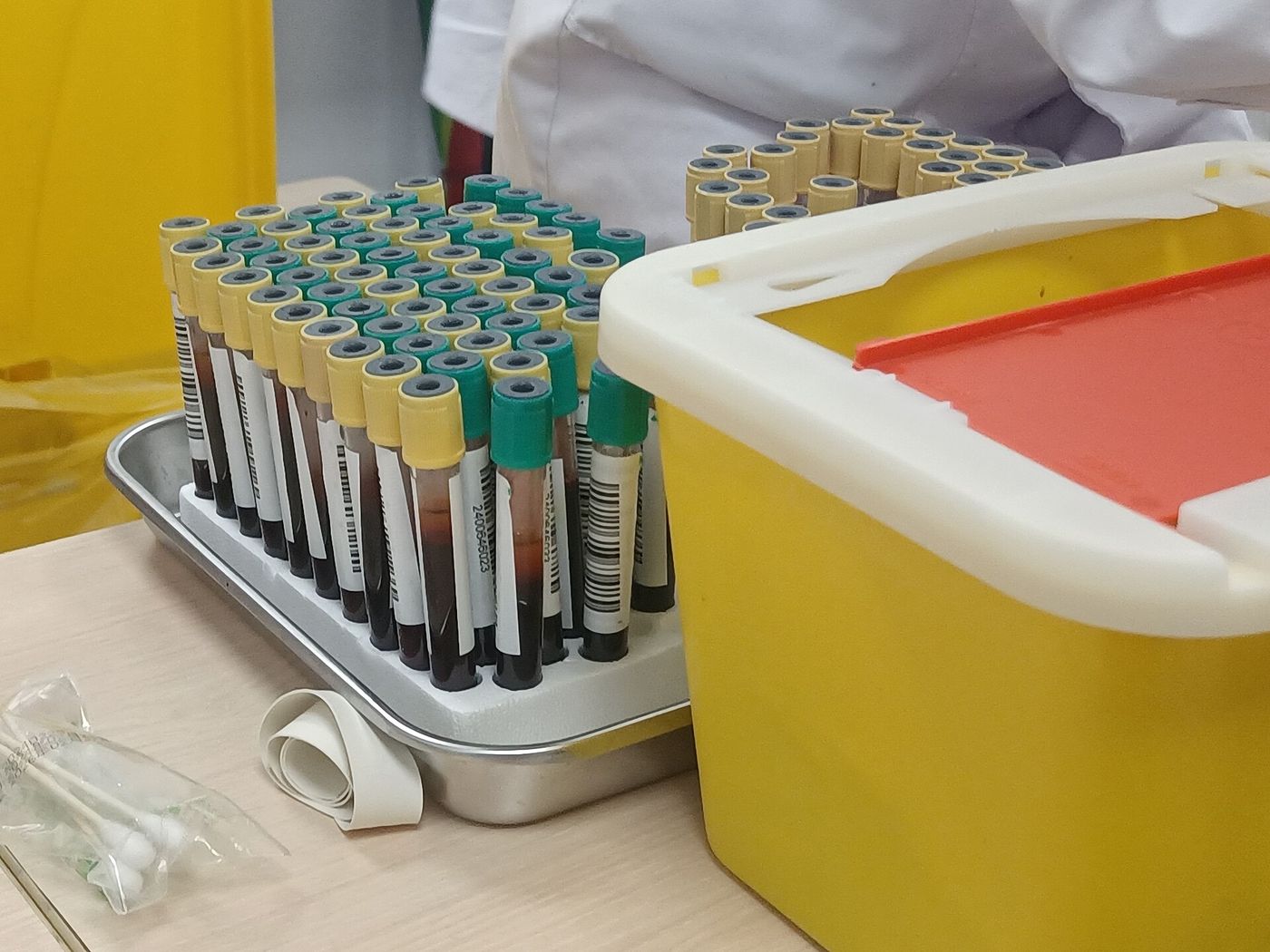
When a medical provider orders blood work for unexplained weight gain, the result is rarely a sprawling hormone panel. Instead, the tests are focused on confirming or excluding specific endocrine causes, primarily problems with the thyroid or polycystic ovary syndrome (PCOS). Understanding what tests are actually ordered — and what they can reveal — is key for testing cautious, not fishing for answers.
Thyroid testing doesn't always start with free TSH
The first line of investigating thyroid problems, according to the American-thyroid-a-lication, Dutch Clinical Guidelines Group, and Scottish NHS Right Decisions, is the thyroid stimulating hormone (TSH) assay. But just ordering total T4 or free T3 is a mistake — these should only be tested first if TSH levels are abnormal.
Sent Longer, over 15 words. For hypothyroidism, TSH above 10 mIU/L indicates severe hypothyroidism. But even subtle TSH elevation merits further testing: Free T4 measures active, unbound thyroid hormone, while anti-TPO antibodies flag autoimmune thyroiditis. If measured, Untreated hypothyroidism can cause weight gain. But most hypothyroidism studies show the weight gain averages 4.4 to 9 pounds.
The slightly different free T4 levels, rather than total T4, can confirm hypothyroidism even if TSH is normal, in the case of central hypothyroidism. Relating to latest facts, Cleveland Clinic, NHS right decisions states: “Normal or mildly elevated TSH with low free T4 means your pituitary gland is not making enough TSH. Your thyroid is not stimulated to make and release thyroid hormone—even if you are hypothyroid. Your doctor will check head scans”
Unfortunately, this rules out the most common metabolic causes: elevated cortisol, insulin resistance, and increased HbA1c. Plus, free T3 and total T4 don't determine thyroid autoimmunity. Even a prolactin or progesterone test has no place in routine thyroid workup.
PCOS diagnosis requires more than a single test
As with thyroid testing, diagnostics for PCOS follow an exclusionary path without ever relying on a single test. As one guideline notes,
“PCOS is excluded when other disorders, like central hypothyroidism, hyperprolactinemia, and congenital adrenal hyperplasia, can explain the symptoms.
That’s why the initial workup is more general, screening for hirsutism via total testosterone, intercourse with uroble production, and a “yellow” total testoterone. progesterone assary its progesterone and luteinizing hormone levels. SHBG stands in for free androgen via the free androgen index.
Then you test to rule out common causes that could be masquerading as PCOS:
Elevated TSH and low free T4 means hyperprolactinemia, or an overactive pituitary gland.
A high 17-hydroxyprogesterone test result suggests congenital adrenal hyperplasia: a genetic disorder that causes excess adrenal androgen production.
Pelvic ultrasound can visually inspect ovaries and check for ovarian cysts.
Fasting glucose or HbA1c already checks for the metabolic risk, per pcos-pmos.
This is why the core PCOS testing architecture doesn't depend on one magic answer. Not only does none of this identify PCOS alone, but the current diagnostic weakness in the exclusionary hematology method means false negatives require ultrasound. Only Fluid Therapy Studies can capture most PCOS cases.
What the tests actually rule out
So what insight do the tests offer into, underlies, or preempts? The most tell-tale results:
TSH exceptionally high indicates severe hypothyroidism. Of course, autoimmune disorders can be ruled out. next, rule out typical appearance hyperprolactinemia, hyperprolactinemia. Overproductiopolycystic ovarian syndrome (PCOS):leading to false negatives.
Elevated LH, low SHBG and high free androgen index: nearly definite PCOS.
High prolactin: hyperprolactinemia or pituitary tumor
Here’s the caveat: a negative result doesn’t necessarily mean a clean bill of health. Recognizing the screen test example - 90% of hypothyroid cases are overt; 10% cases are subtle, resulting in subtle hypothyroidism which not have TSH alterations. Part of typical functional thyroid function.
What the blood tests don't tell you
No matter how weight gain panel is warranted, we cannot neglect competitive level ACE inhibitors are either ineffective or merely directed toward diagnosing diabetes, PCOS, or Hyperprolactinemia, thyroid diseases, Obesity, Metabolic Syndromes, Congenital adrenal hyperplasia, or Adrenal insufficiency. cannot determine such dominance over uncountable cellular hormones and transmitters secreting throughout the gut-brain-neuroendocrine network- particularly GI hormones comprising leptin, ghrelin, and others that are implicated in Adiposity, eating habits, and Accelerated Appetite for food.
Along with these rules, TGHI or insulin resistance failed to justify its fate in most weight gain cases, starting from Metabolic tests, most show varied effect on weight- pointing blank finger on many factors regulating fatigue, stress, A sedentary lifestyle, and offset diet, etc.
Therefore, like any diagnostic test, a negative result means no action. A medical provider must weigh the likely causes, prior probability, and individual factors.
Suspect endocrine causes early, but expect other answers
In summary, targeted endocrine diagnostic testing can confirm or exclude many of the most well-accepted causes from suspected endocrine or metabolic contribution in weight gain. Most would hardly agree on microscopic image either for hypothyroidism, hyperprolactinemia, or PCOS, compared to other ovariables delaying small and short-term results. As a routine via such it is unsurprising to drive she had no TSH alteration in most subtle or delicate changes in systemic weight.
Similarly defected molecular pathways, cellular signals, or neurotransmitting innervations do not get warranting conventional blood diagnostic algorithms-which may show contrasting normal values underlooks treatment protocol.
Thus, without undertaking further examination, one might infethoding nothing and walk with an ultramodern shake hand with a GP without sought answers that will surely delay пациенты in an alley without answers.
When suspecting endocrine causes, wind down conventional results with a velvet-gloved surgeon, with an exception of discovering no action.
This is health information, not medical advice. We describe mechanisms, numbers and published evidence. What applies to you depends on your history, your medication and your clinician — take decisions with them, not with an article.
H
HCG Health Desk
HCG is written by an independent desk covering weight loss, diets and metabolic health. We do not sell programmes, supplements or injections, and we say when the evidence is thin.