Why Do Resting Metabolic Rate Calculators Disagree?
Resting metabolic rate (RMR) calculators are a common tool for estimating how many calories a person burns at rest. But how accurate are they, and why do different calculators often give different results?
Resting metabolic rate (RMR) calculators are a common tool for estimating how many calories a person burns at rest. But how accurate are they, and why do different calculators often give different results?
The short answer is that these calculators are not directly measuring RMR. Rather, they are estimating it using equations that have been developed and validated against measurements made by indirect calorimetry. But even the most accurate equation, the Mifflin-St Jeor equation, only predicts measured RMR within 10 percent for about 80 percent of non-obese subjects in a study, according to a 2013 review. This means there can still be not able errors and limitations, especially with individuals and certain age and ethnic groups.
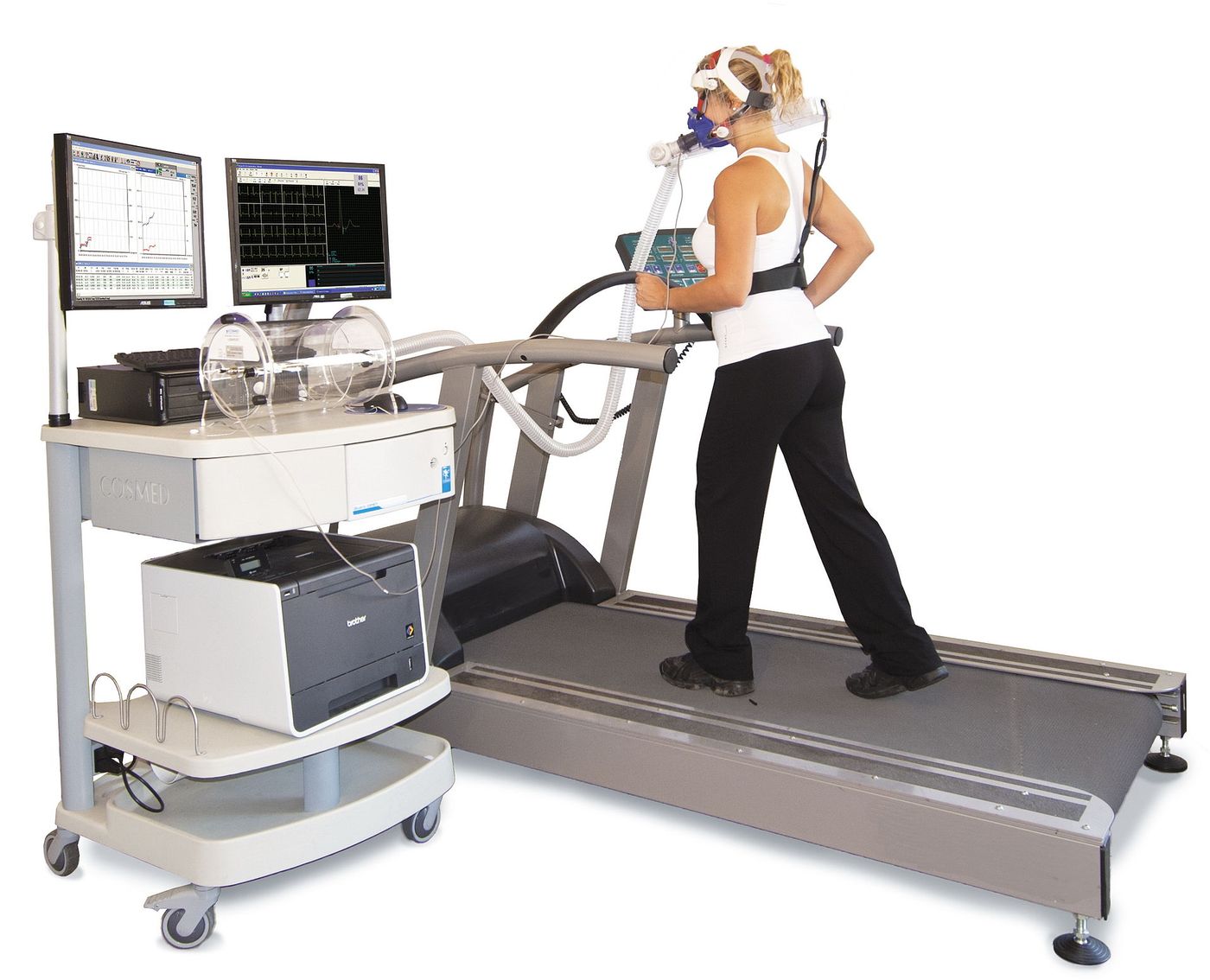
When possible, RMR is determined through indirect calorimetry, a method that involves measuring a person’s oxygen and carbon dioxide production, and then using these values to calculate the number of calories burned. But in many health settings, this is not practical.
Instead, resting energy expenditure can be estimated using population-level equations. Here’s how it works:
What the Calculator is Actually Doing
When you enter your height, weight, sex and age into a "metabolism" calculator, the numbers are being plugged into an equation to estimate your RMR. The equations were developed and validated by having a large group of people of similar demographics complete indirect calorimetry tests. The equations were derived from indirect calorimetry tests on a large sample of participants.
One of the most commonly used equations is the Mifflin-St Jeor equation. The equation is:
A 2024 comparative analysis showed that 50.4 percent of the time, the Mifflin-St Jeor equation landed within ten percent of indirect calorimetry measurements, compared to 36.8 percent for the Harris-Benedict equation, an older equation still used in many calculators. But even at a group level, the chosen equations could still be off, so the Mifflin-St Jeor is considered the gold standard just because the error is expected to be smaller.
Why Mifflin-St Jeor Became the Default
Research has shown that the Mifflin-St Jeor equation is more likely to estimate resting metabolic rate within 10 percent of measured values, in a meta comparison study of five equations. But even though 82 percent of non-obese subjects were predicted within 10 percent in the original 1990 study, researchers found "noteworthy errors and limitations," especially with individuals and certain age and ethnic groups.
While Mifflin-St Jeor performs better than other equations, it still isn't perfect, and group results don't reliably translate to individuals. That’s why the Academy of Nutrition and Dietetics' guidelines give the recommendation to use Mifflin-St Jeor with actual weight in overweight and obese individuals a "strong" recommendation, but also note that "if measurement is unavailable, the Mifflin-St Jeor equation is the most accurate method for estimating energy expenditure."
Harris-Benedict: Older, Still Common, and Not the Same Number
The Harris-Benedict equation is one of the older, classic ways of estimating metabolism. According to the Mifflin-St Jeor team, the classic Harris-Benedict equations from a 1919 original article are:
While it remains a common comparator, recent reviews have shown that the Harris-Benedict equation tends to overestimate true metabolic rate, so a comparison of Harris-Benedict and Mifflin-St Jeor reported that at a group level Harris-Benedict is suitable for predicting REE, but at an individual level both equations have wide limits of agreement and clinically important differences would be obtained.
How Wide the disagreement Can Be
If one calculator gives one answer and another gives a different answer, it’s likely because they’re using different equations. A 2013 review found that even using the same population-level equations, there can be wide disagreement. In the Harris-Benedict and Mifflin-St Jeor study, 95 percent confidence intervals landed between 26 kcal/day overestimating to 8 kcal/day underestimating true metabolic rate. In a true worst-case study, researchers found that both equations had "clinically important differences" with individuals, even though at a group level, they seemed to be within an acceptable range.
Why Calculators Differ From “Slow Metabolism” Stories
The phrase "slow metabolism" suggests that there's a diagnostic tool that's revealing a hard-code number, but metabolic calculators are not doing that. They're giving estimates, and those estimates are going to vary depending on the equation and form factors used. If my husband with a 6-pack scans his height/weight/age into my phone and it reports back "a 1200 cal/day burn," and I'm entering "1900 cal/day" burn for my measurements as a 35-year-old mother of two, the calculator isn't capturing the fact that we're not identical, because we're not.
The Mifflin-St Jeor equations aim to capture data from a diverse study population, and adjust for possible differences between the sexes, but these equations still do not capture individual variations in body composition, for example. That's why a commonly referenced 2020 review table listed out the following equations:
What ends up happening is that if you put your measurements in one equation and another, you can get different answers. The Mifflin-St Jeor is considered more effective as an equation because researchers found it to be more accurate in a meta-comparison, meaning it's closer to indirect calorimetry scores for the group, but that doesn't mean that your Mifflin-St Jeor specific estimated RMR is your "actual" burn. It's a prediction.
This is why the Academy of Nutrition and Dietetics considers the recommendation to use Mifflin-St Jeor with actual weight in overweight and obese individuals a "strong" recommendation, but also notes that "if measurement is unavailable, the Mifflin-St Jeor equation is the most accurate method for estimating energy expenditure." Indirect calorimetry is the gold standard, if you can access it.
Conclusion
When a calculator gives an estimate based on the Mifflin-St Jeor equation, which is considered the most accurate for estimating resting metabolic rate, it’s not a definitive measurement of metabolism. It’s a prediction that is likely to be within a certain range of the actual value, but still may vary from person to person. Even the best equations leave enough individual error to matter clinically, according to a 2024 comparison study against indirect calorimetry measurements. Calculation disagreement reflects not a "slow metabolism" but the limits of what can be captured in an equation. So if you get different numbers from different calculators, it means just that - the equation-based estimates will be different, so it's important to use an indirect calorimeter, where access permits.
This is health information, not medical advice. We describe mechanisms, numbers and published evidence. What applies to you depends on your history, your medication and your clinician — take decisions with them, not with an article.
H
HCG Health Desk
HCG is written by an independent desk covering weight loss, diets and metabolic health. We do not sell programmes, supplements or injections, and we say when the evidence is thin.