Keeping Muscle While Losing Fat: The Science-Backed Plan
Early weight loss on a diet can look like muscle loss on paper, but what you're seeing is mostly water and glycogen. actual muscle tissue loss is a last resort.
By the HCG Health DeskPublished 5 min read
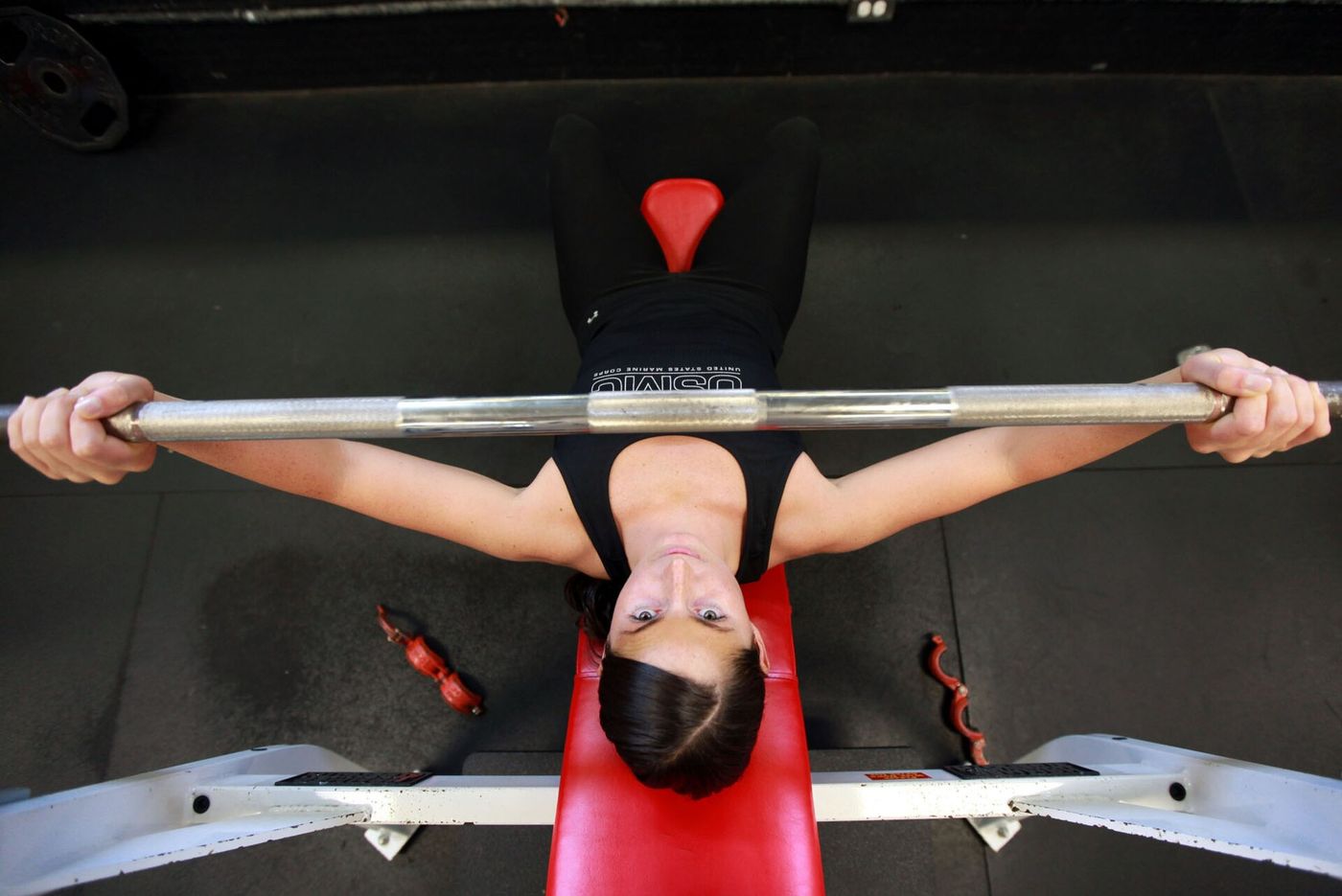
USMC-110816-F-2786W-005. Photo: Cpl. Courtney C. White / Wikimedia Commons (Public domain)
Early weight loss on a diet can look like muscle loss on paper, but what you're seeing is mostly water and glycogen. actual muscle tissue loss is a last resort. And the research is clear: a higher protein intake combined with resistance training can protect that tissue for as long as possible.
The median recommendations let the specifics vary with fitness status, leanness, size of the deficit and exercise volume—all of which are out of reach for the reader. But a few stands emerge.
# The Scale Is Lying, At First
In the early weeks of weight loss, volatility in protein, glycogen and water make up most of the scale movement. And glycogen alone can vary the fat-free mass metric by a meaningful 3–5 pounds.
It's an important reality check to know that 98% of this fluctuation is not muscle tissue.
Even so, early lean-mass losses still hurt. And that 2% muscle tissue experiences stress in a deficit.
So the real question is not that the lean-mass number changed, but why it changed—it was from the water and glycogen stores 98% of the time, but about 2% of the time, it's because the muscle tissue stressed. The diet is working on glycogen first, all the while the muscles are be coming stressed.
In those cases, a falling lean mass signal could still suggest a problem. And the best solution has more to do with protein and resistance training than set counts alone.
# Spare Muscle Tissue With High-Quality Protein
Protein is essential for sparing muscle tissue in weight loss. An estimated 2.3–3.1 grams of protein per kilogram of fat-free mass per day for energy-restricted, resistance-trained athletes takes the lead.
A high protein intake may be required to maximise the retention of lean body mass in resistance-trained individuals during hypocaloric periods. Many studies confirm its impact.
The studies show an increase in lean body mass and a decrease in fat mass. Even during a long period of severe caloric restriction, significant effects were noted. The effects were most apparent in resistance-trained individuals.
The data also suggests that more protein will help keep the muscles from shrinking, and that athletes in a deficit may need higher protein intakes.
Early studies suggest that the effect of protein consumption on lean body mass was significant. This was even when only studies using resistance exercise and reporting daily protein ingestion were considered. It suggests that resistance exercise alone will not stop muscle shrinkage during deficit, and that protein is key.
For loss of fat and calorie restriction, protein intakes of 1.8–2.7 g/kg are recommended when combined with a 500 kcals energy deficit and resistance exercise. 500 calories is about 15–20% Total Daily Energy Expenditure. And despite also doing resistance exercise, some lean mass loss may still occur.
The studies recommend a daily protein intake of 2.2–3.0 g/kg body weight, or 2.3–3.1g/kg fat-free mass. The higher the body weight, the greater the volume food consumed.
They also recommend 3–6 protein feedings per day. One protein feeding within 2–3 hours before training, and another within 2–3 hours after training.
It shows that higher protein intakes are needed, or 2-3 grams per body weight, but that protein should be spread over 3-6 feedings daily, and at certain times: 2–3 hours before training, and 2–3 hours after training.
Finally, a 2023 review on very low-calorie diets stated that resistance exercise combined with higher protein intake around 1.2 g/kg works synergistically to promote lean mass sparing during energy deficit.
# Resistance Training: The Other Muscle-Sparing Lever
But even though high protein intake supports muscle growth during weight loss, resistance exercise is an important part of the equation.
In a study, during a marked energy deficit, 2.4 g protein/kg/day was more effective than 1.2 g protein/kg/day in promoting increases in lean body mass and losses of fat mass, when combined with a high volume of resistance and an aerobic exercise. It suggests that both protein intake and resistance exercise are necessary for muscle growth during weight loss.
Over 50 studies contributed to a 2022 review, which found that protein has a significant effect on lean body mass when combined with resistance exercise. And 66 studies contributed to the analysis in favour of protein's effect on lean body mass.
A 2021 review on fat-loss phases in resistance-trained individuals recommended dietary protein at 2.2–3.0 g/kg body weight, or 2.3–3.1 g/kg fat-free mass, along with 3–6 protein feedings per day.
In addition to setting broad guidelines, the evidence does not single out a one-size-fits-all number. Judging by the data, the optimal answer will vary based on training status, leanness, and the size of the deficit - all are beyond the scope of this article.
# Reading the Fat-Loss Numbers, Not the Fear
That's because it's not typical for muscle loss to precede fat or glycogen loss. If you're losing fat, you're likely losing other components too. Finding out what you're losing, and why you're losing that, is more important than trying to find the variables.
When it comes to fat loss, lean body mass losses are inevitable. But the loss of fat-free mass in early dieting is mostly glycogen and water, not contractile tissue. And incidents of muscle loss are limited to the last resort metabolism, when glycogen is exhausted, and the metabolism is in stress.
You would be hard pressed to find a diet or lifter that becomes lean by sacrificing mostly muscle. Most of the loss is water weight and muscle glycogen. Because the body prioritizes glycogen stores, and it looks to the glycogen stores before losing muscle tissue. Only when glycogen is exhausted, or there is stress, does it go for the muscle.
The key to real muscle retention is to avoid that stress.
# Asking the Right Questions - and Getting Answers
When reviewing the studies' advice, scope, contradictions, and limitations, a few things emerge.
Several points emerge. Whether you’re an elite athlete or an average dieter, you're going to lose glycogen, some fat and very little contractile tissue in a diet. It’s part of the process.
Another is that nothing in the data supports a single universal guideline, because it seems that one doesn’t exist. Resistance exercise and protein recommendations need to be tailored, and are probably best guesses even when tailored. It shows that the problem of losing muscle is complex, and that even with their limitations, these studies are the best we have.
So should dieters sacrifice a little external validation in exchange for a less strenuous lifestyle? Perhaps - this is a logical question.
And perhaps it's reflective wisdom to think about quality of life, not just contractile tissue and water. It may be possible to ease off slightly, while keeping the muscle during a diet, and we perhaps just keep less of an eye on the scales.
This is health information, not medical advice. We describe mechanisms, numbers and published evidence. What applies to you depends on your history, your medication and your clinician — take decisions with them, not with an article.
H
HCG Health Desk
HCG is written by an independent desk covering weight loss, diets and metabolic health. We do not sell programmes, supplements or injections, and we say when the evidence is thin.